
So you’re stuck between two mattresses and your back is begging you to decide. [Make A Table Comparing Memory Foam Vs Hybrid Mattresses] is exactly what I did before buying my own bed last year. And honestly, it saved me from a pretty expensive mistake.
I spent way too many nights testing different beds at showrooms. My lower back would ache after sitting on memory foam for ten minutes. But hybrid mattresses felt different right away. So I went home and started researching properly.
Why [Make A Table Comparing Memory Foam Vs Hybrid Mattresses] Actually Matters
Most people just buy whatever’s on sale. That’s how I almost ended up with the wrong mattress too. But sleep affects everything—your mood, your focus, even your immune system.
The Sleep Foundation has solid data on this. Memory foam and hybrid mattresses use completely different construction methods. That difference changes how your body feels every single night.
In my experience, the wrong mattress doesn’t just mean bad sleep. It means waking up stiff, grumpy, and reaching for coffee at 6am.
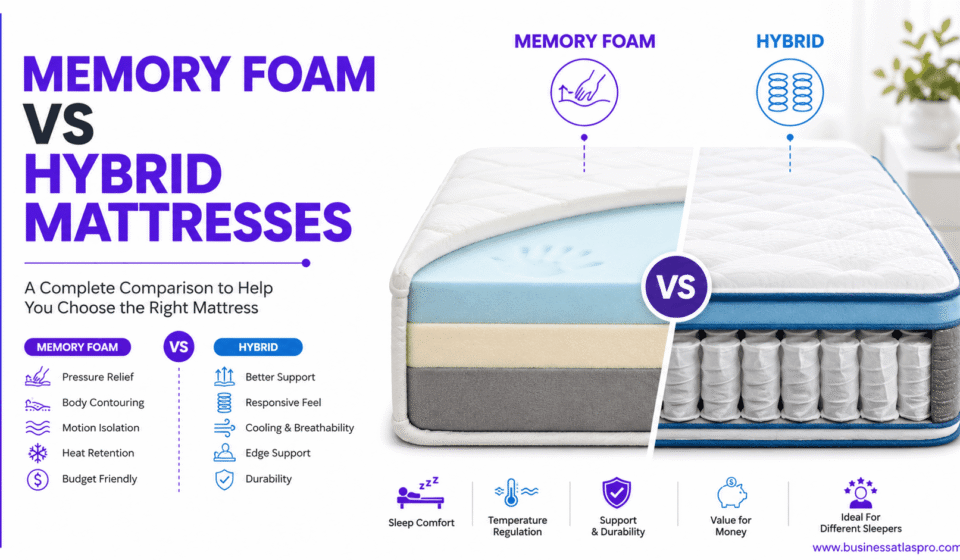
Quick Comparison Table
| Feature | Memory Foam | Hybrid |
|---|---|---|
| Material | Solid foam layers | Foam + coil springs |
| Motion isolation | Excellent | Good |
| Cooling | Can trap heat | Better airflow |
| Bounce | Minimal | More responsive |
| Edge support | Weaker | Stronger |
| Price range | $600–$1,800 | $900–$2,500 |
| Best for | Side sleepers, couples | Combo sleepers, hot sleepers |
| Lifespan | 7–10 years | 6–8 years |
This table is the core of [Make A Table Comparing Memory Foam Vs Hybrid Mattresses], and it’s worth printing out before you shop.
What Memory Foam Actually Feels Like
Memory foam hugs your body. It’s that slow-sinking sensation you’ve probably felt before. The foam responds to heat and pressure, molding around your shape.
Tempur-Pedic popularized this material decades ago. NASA originally developed it for astronaut seat cushions. Pretty wild origin story, right?
The big plus is motion isolation. If your partner tosses and turns, you won’t feel a thing. I’ve noticed that couples especially love this feature.
But there’s a catch. Memory foam can trap body heat. If you sleep hot, this might become annoying fast.
Some newer foams include gel beads or copper infusions. These help with temperature regulation somewhat. Still, traditional memory foam runs warmer than most alternatives.
Another thing—getting in and out of bed can feel tricky. The slow-response foam doesn’t bounce back instantly. So quick movements feel sluggish sometimes.
What Hybrid Mattresses Bring To The Table
Hybrid mattresses combine foam layers with coil systems underneath. You get foam’s comfort plus springs’ support and airflow.
The coils create space for air to circulate. This naturally helps regulate temperature better. So if you’re a hot sleeper, hybrids often win.
Consumer Reports regularly ranks hybrids highly for back support. The combination of materials offers more versatility overall.
Hybrids also bounce more. This makes switching positions easier during the night. And it’s better for couples who, you know, do more than just sleep on the bed.
Edge support tends to be stronger too. You won’t feel like you’re rolling off the side. That matters more than people realize until they experience it.
[Make A Table Comparing Memory Foam Vs Hybrid Mattresses] For Different Sleep Positions
Your sleeping position changes everything about mattress choice.
Side sleepers generally benefit from memory foam. It cushions shoulders and hips effectively. Pressure points get the relief they need.
Back sleepers often prefer hybrids. The firmer support keeps spine alignment in check. Too much sinking can actually cause back pain.
Stomach sleepers need firmer surfaces overall. Hybrids usually provide that firmness better. Memory foam can let hips sink too deep.
Combo sleepers who shift positions all night should lean hybrid. The responsiveness makes position changes smoother. Memory foam can feel restrictive when you’re constantly moving.
I switch positions constantly throughout the night. That’s actually why I ended up choosing hybrid myself.
Price Differences Worth Knowing
Memory foam mattresses are often cheaper to manufacture. That sometimes means lower price points for buyers.
But premium memory foam brands can get expensive too. Materials like cooling gel infusions add cost. So don’t assume foam always means budget-friendly.
Hybrids typically cost more due to coil manufacturing. Springs require more complex assembly processes. That complexity gets passed onto the price tag.
According to Sleepopolis, the average hybrid costs about $200–400 more than comparable foam beds. That’s a meaningful difference for most budgets.
But here’s the thing—hybrids might last slightly less long. So the higher upfront cost doesn’t always mean better long-term value.
Durability And Lifespan Considerations
Memory foam tends to last longer overall. Quality foam can hold its shape for 8–10 years. Less moving parts means less mechanical wear.
Hybrids have springs that can weaken over time. Coils experience metal fatigue eventually. This typically happens around the 6–8 year mark.
However, this varies wildly by brand quality. Cheap hybrids degrade faster than premium ones. And cheap memory foam can develop permanent body impressions too.
In my experience, spending a bit more upfront pays off. Budget mattresses from either category wear out faster. That’s just been my consistent observation.
Cooling And Temperature Regulation
This is where hybrids often shine brightest. The coil layer creates natural airflow channels. Heat doesn’t get trapped against your body.
Memory foam’s dense structure works against airflow. Even cooling gels only help so much. The foam itself still retains heat naturally.
If you’re someone who wakes up sweaty, consider this carefully. Hybrid mattresses generally sleep cooler. But quality matters more than category here too.
Some premium memory foam beds use open-cell structures. These improve breathability significantly compared to older foams. So not all memory foam runs equally hot.
Motion Transfer And Partner Disturbance
If you share a bed, this section matters most. Memory foam absorbs movement almost completely. Your partner won’t feel you rolling over.
Hybrids transfer slightly more motion through the coils. Modern pocketed coil systems minimize this though. Each coil moves somewhat independently now.
Wirecutter tested multiple hybrids for motion isolation specifically. Many performed surprisingly well despite having springs.
But if your partner moves a lot at night, memory foam still wins. The difference is noticeable in side-by-side comparisons.
Real-World Scenario: My Own Experience
I had chronic shoulder pain for years. Memory foam initially seemed like the obvious solution. So I bought a popular all-foam mattress online.
The shoulder pain improved within two weeks. But I started sleeping hot almost immediately. Summer nights became genuinely uncomfortable and sweaty.
After six months, I switched to a hybrid. The shoulder relief was still there, just slightly less. But the temperature improvement was massive and immediate.
So now I sleep cooler with manageable shoulder support. For me, hybrid won out long-term. But your priorities might differ completely.
Frequently Asked Questions
Is memory foam or hybrid better for back pain?
It depends on severity and sleeping position. Mild back pain often improves with either type. Severe issues might need a firmer hybrid specifically.
Do hybrids really sleep cooler than memory foam?
Generally yes, due to the coil airflow system. But quality and foam type still matter significantly.
Which lasts longer, memory foam or hybrid?
Memory foam typically edges out hybrids slightly. Though both vary based on quality and usage.
Can I try before buying online?
Most online brands offer sleep trials now. Usually 90–365 nights to test things out. Check the Better Sleep Council for general buying guidance too.
Making Your Final Decision
There’s no universally “better” option here. It genuinely depends on your body and preferences. Both categories have improved massively over recent years.
If you sleep hot or move positions often, hybrid makes sense. If you want that cocoon-like feeling, memory foam delivers. And if you’re sharing a bed, factor your partner’s preferences in too.
Whatever you choose, check the trial period carefully. Sleep on it for at least thirty nights minimum. Your initial impression often changes after a few weeks.
Bottom line—take your time with this decision. A mattress is something you’ll use every single night. Getting it right genuinely changes your daily life.
Also Read: Tennis Ball Tennis: What Every Player Should Know