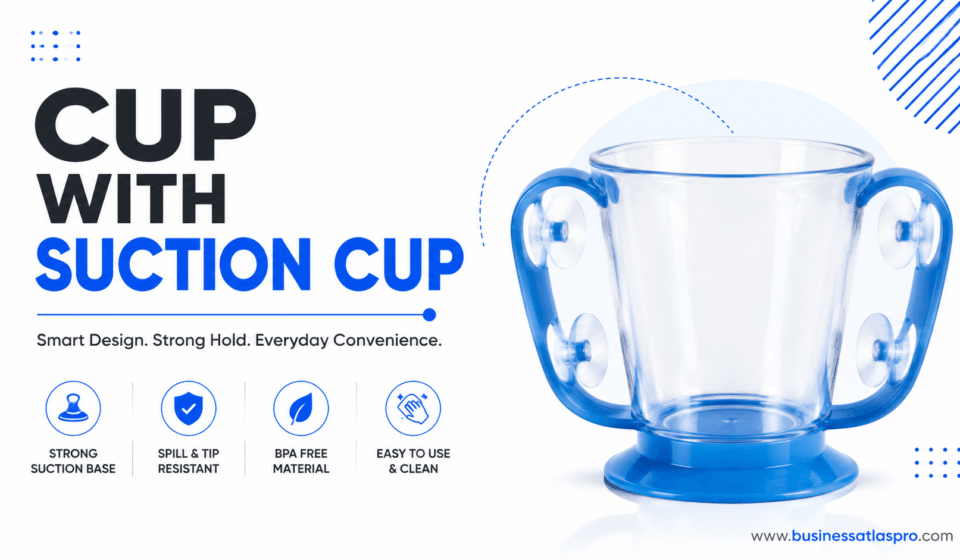

A cup with suction cup base sounds simple. But once you’ve watched your coffee slide off a wet countertop in slow motion, you start appreciating the idea a lot more. These cups use a vacuum seal at the bottom to grip surfaces. And they genuinely work better than most people expect.
I’ve noticed that people often overlook this product until they have kids. Then suddenly it becomes essential. But honestly, it’s useful way beyond the toddler stage.
How a Cup With Suction Cup Actually Works
The mechanism is straightforward. There’s a flexible rubber or silicone base attached to the cup’s bottom. When you press it down, air gets pushed out from underneath. That creates a partial vacuum. The surrounding air pressure then holds the cup firmly in place.
It’s the same physics behind a suction hook on a bathroom tile. But applied to your drink. The grip isn’t permanent — a quick twist or lift releases it cleanly.
Most cups use silicone for the base. It’s flexible, food-safe, and durable. Some models have a detachable suction pad. Others have it built directly into the cup’s design.
The seal works best on smooth, non-porous surfaces. Think glass tables, tile, high-chair trays, and car dashboards. Textured or rough surfaces reduce the grip significantly. So keep that in mind before buying.
Who Actually Uses a Cup With Suction Cup?
More people than you’d think. Here’s a quick breakdown:
Parents of toddlers — This is the biggest market. Young kids knock things over constantly. A cup with suction cup on a high-chair tray can survive a lot of drama.
People with mobility challenges — Anyone with limited hand strength or coordination benefits here. The cup stays put, which means less frustration and fewer accidents.
Car and van dwellers — Road trippers and van lifers use them on fold-out tables and smooth surfaces inside their vehicles.
Desk workers — A suction cup mug on a glass desk? It’s surprisingly practical. Especially if you have pets that brush past your workspace.
Boaters and campers — On a rocking boat, a stable cup is a real comfort. Many marine enthusiasts swear by them.
Choosing the Right Cup With Suction Cup
Not all of these cups are equal. Here’s what to look for.
Material matters. BPA-free plastic and food-grade silicone are the safest options. For hot drinks, look for double-walled designs that won’t burn your hand.
Suction strength. Press the cup down and try to slide it sideways. A good suction base won’t budge easily. Cheap versions lose grip within minutes.
Ease of release. A cup that grips well but is hard to lift becomes annoying fast. Look for a small tab or raised edge that lets you break the seal easily.
Dishwasher safety. Most are top-rack safe. But check before you buy. Some suction bases warp under high heat.
Size. These cups come in everything from small toddler cups to full 16 oz travel mugs. Match the size to the use case.
In my experience, mid-range options from reputable baby or kitchenware brands outperform budget versions consistently. The suction lasts longer and the materials feel more solid.
What to Look For
The children’s market for these cups is huge. And for good reason. But there are specific things to check when buying for a child.
First, look for BPA-free certification. This matters most for cups that hold hot liquids or go in the dishwasher frequently.
Second, check the spout design. A suction base keeps the cup in place. But if the lid is poorly sealed, spills still happen — just differently.
Third, consider the grip texture on the sides. Kids need something easy to hold. A smooth-sided cup with a great suction base is only half the solution.
Brands like Munchkin and OXO Tot have well-reviewed options in this category. Both prioritize safety and practical design.
And don’t overlook the cup’s weight. A heavier base helps the suction work better. But a cup that’s too heavy becomes hard for small hands to lift independently.
Surface Compatibility: Where a Cup With Suction Cup Works Best
This is a detail that trips people up. The cup grips brilliantly on some surfaces and barely holds on others.
Works well on:
- Glass tabletops
- Smooth plastic high-chair trays
- Laminate and tile surfaces
- Polished wood (sealed)
- Car dashboard mats (smooth ones)
Doesn’t work well on:
- Fabric or cloth surfaces
- Rough wood or unfinished surfaces
- Textured plastic
- Silicone placemats (ironically)
The trick is the smoothness of the contact point. Any gap in the seal breaks the vacuum. So if you’re buying one for a specific surface, test it before committing.
Some people use their cup with suction cup on a smooth cutting board placed on top of a rough table. That’s a clever workaround. And it works.
Comparing Suction Cup Bases vs. Weighted Bases
These aren’t the only spill-prevention cups out there. Weighted-base cups are a popular alternative. So which is better?
Cup with suction cup:
- Locks to the surface
- Works best on smooth flat areas
- Easy to move intentionally
- Grip can fade on dusty or wet surfaces
Weighted-base cup:
- Harder to tip but doesn’t lock down
- Works on any surface type
- No vacuum mechanism to maintain
- Better for rough or uneven surfaces
For stationary use on smooth surfaces — like a high chair or desk — the suction cup wins. For outdoor use or on varied surfaces, a weighted base might serve better.
Some cups actually combine both features. A weighted bottom with a suction pad gives you extra stability in two different ways. Those tend to be pricier but genuinely useful.
Caring for Your Cup
Maintenance is easy but specific. Ignore it and the suction fails faster than it should.
Rinse the suction base after every use. Food residue and grease reduce the grip noticeably. A quick wipe with a damp cloth keeps the seal working properly.
Avoid soaking the suction base for extended periods. It can cause the rubber to soften and deform over time.
Check for cracks or tears in the suction pad regularly. Even a small tear breaks the vacuum completely. Replaceable pads are a big advantage here.
Store the cup upright or with the suction base facing up. Pressing it flat when stored can cause the rubber to take on a curved shape permanently.
For a deeper look at how silicone ages and degrades, this resource from the American Chemical Society is worth a quick read.
The Real-Life Value
Here’s an honest take. These cups solve a specific problem really well. They’re not for everyone or every situation. But when the fit is right, they make daily life noticeably easier.
For parents, fewer spills mean fewer messes to clean. That adds up across hundreds of meal times. For people with physical limitations, it adds independence and confidence. For anyone who works at a glass desk with a clumsy pet nearby — it’s just smart thinking.
The Occupational Therapy Advisor recommends adaptive cups with stable bases for clients working on fine motor control. A cup with suction cup fits naturally into that category.
So if you haven’t tried one, it’s worth the small investment. Pick one suited to your surface, check the material, and press it down firmly. You might be surprised how much you end up relying on it.
Also Read: Tennis Ball Tennis: What Every Player Should Know