
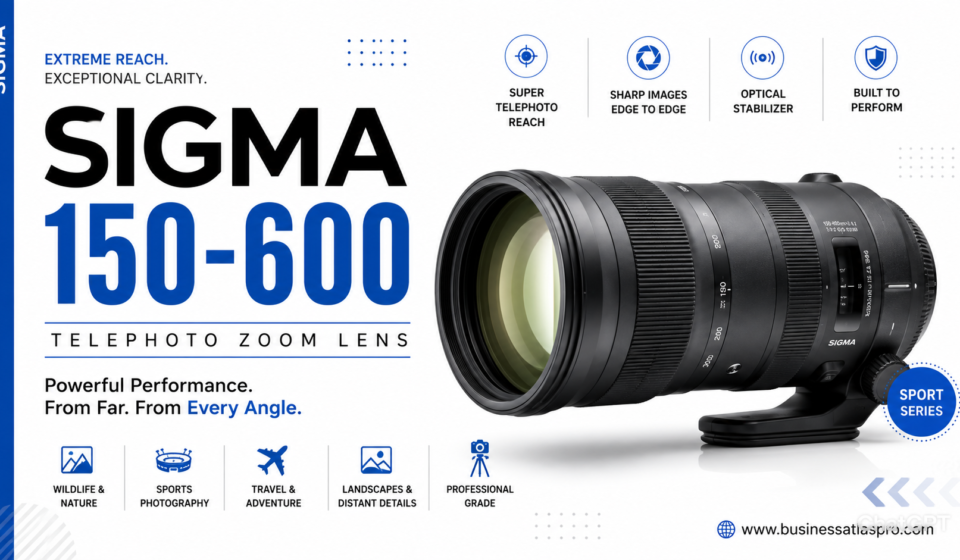

The Sigma 150-600 sat in my bag for months before I finally tried it. I’d heard mixed reviews and wasn’t sure it was worth carrying. Turns out, it became my go-to lens for wildlife.
So let’s talk about what this lens actually does well. And where it falls a bit short too.
What Is The Sigma 150-600, Exactly?
The Sigma 150-600 is a super-telephoto zoom lens. It covers a massive focal range from 150mm to 600mm. That makes it popular for wildlife and sports photography.
Sigma actually makes two versions of this lens. There’s the Contemporary and the Sports version. Both share the same focal range but differ in build quality.
The Contemporary version is lighter and more affordable. The Sports version is heavier but more weather-sealed. I’ve used the Contemporary, so that’s mostly what I’ll cover here.
This focal range essentially replaces multiple prime lenses. You’re not carrying a 300mm and a 600mm separately. One lens covers both situations comfortably.
I’ve noticed that the zoom range alone changes how I shoot. I can frame distant birds, then zoom out for landscape context. That flexibility is honestly the biggest selling point.
How The Sigma 150-600 Performs In The Field
Autofocus speed is decent but not class-leading. In good light, it locks onto subjects quickly. In low light or against busy backgrounds, it hesitates slightly.
For birds in flight, this hesitation can mean missed shots. But for slower-moving wildlife, it’s rarely an issue. Mammals grazing or perched birds focus reliably almost every time.
Image stabilization works well for handheld shooting. Sigma calls this their OS system. It compensates for roughly 4 stops of shake reduction.
At 600mm handheld, that stabilization matters enormously. Without it, getting sharp shots becomes nearly impossible. With it, I regularly get usable shots at slower shutter speeds.
DPReview tested this lens extensively when it launched. Their findings matched my experience generally. Sharpness is strong in the center, softer toward edges at 600mm.
Build quality feels solid despite the affordable price point. The zoom ring has a slight resistance that prevents accidental zooming. Weather sealing on the Contemporary version is basic but adequate.
In bright daylight, color rendition is vibrant and accurate. Contrast holds up well even in challenging lighting. Chromatic aberration exists but is manageable with editing.
Weight And Portability: The Real Tradeoff
This is where the Sigma 150-600 demands honesty. It’s not a lightweight lens by any measure. The Contemporary version weighs around 1,930 grams.
That’s almost two kilograms hanging off your camera. For a full day of hiking with this lens, your shoulder will know it. I’ve felt this firsthand on longer wildlife outings.
A monopod or tripod becomes genuinely helpful at 600mm. Handholding for extended periods gets tiring quickly. Even with stabilization, fatigue affects your steadiness eventually.
Compared to prime lenses at similar focal lengths, though, it’s reasonable. A dedicated 600mm prime often weighs even more. And costs significantly more too.
B&H Photo lists detailed specs comparing both Sigma versions. The Sports version adds roughly 700 grams over the Contemporary. That extra weight comes from additional weather sealing and build materials.
For travel photographers, this weight matters significantly. Packing this lens means sacrificing space for other gear. I usually leave one other lens behind when bringing this one.
But for dedicated wildlife trips, the weight becomes secondary. The reach this lens provides outweighs the portability concerns. You’re choosing capability over convenience in that scenario.
Image Quality At Different Focal Lengths
At 150mm, sharpness is excellent across the frame. This focal length performs similarly to many standard telephoto zooms. Edge softness is minimal here.
Moving toward 300mm, quality remains strong overall. Center sharpness stays excellent, with slight edge softening. Most photographers won’t notice issues at this range.
At 400mm, you’ll start seeing more noticeable softness. It’s still usable, especially for online sharing. But pixel-peeping reveals some quality loss compared to wider settings.
At 600mm, the maximum focal length, softness becomes more apparent. Center sharpness remains decent, but edges soften further. Shooting at f/8 or f/9 helps improve overall sharpness here.
In my experience, 600mm shots benefit from slight cropping anyway. Wildlife subjects often don’t fill the frame perfectly. Cropping centers the sharper portion of the image.
Photography Life published detailed sharpness charts for this lens. Their data aligns with general consensus among reviewers. Center sharpness consistently outperforms edges at longer focal lengths.
For web use, social media, or moderate prints, image quality is more than sufficient. For large gallery prints at 600mm, you might notice some softness. But most users won’t push prints that large anyway.
Sigma 150-600 Vs Other Telephoto Options
Compared to Canon and Nikon’s equivalent lenses, the Sigma costs significantly less. Brand-name super-telephotos often run two to three times the price. That price gap is substantial for budget-conscious photographers.
Tamron makes a similar 150-600mm lens too. Both lenses perform comparably in most reviews. Choosing between them often comes down to autofocus motor compatibility with your camera body.
Compared to a fixed 400mm or 500mm prime, the Sigma offers more flexibility. But primes typically deliver sharper images at their respective focal lengths. You’re trading some sharpness for zoom versatility.
For beginners entering wildlife photography, this lens makes financial sense. It lets you explore different focal lengths before committing to primes. You’ll learn what focal range suits your style.
For professionals, this might serve as a backup or travel option. The primary lens would likely be a faster, sharper prime. But the Sigma covers situations primes can’t handle alone.
Real Scenario: A Day At The Wildlife Reserve
I brought the Sigma 150-600 to a local wildlife reserve last spring. Birds were scattered across varying distances throughout the morning. The zoom range proved incredibly useful here.
For distant herons, I zoomed to 600mm easily. For closer deer, I pulled back to 300mm quickly. No lens swapping, no missed moments during transitions.
Autofocus struggled slightly with a flying hawk overhead. The continuous tracking lagged behind the bird’s movement. I missed a few sharp frames during that sequence.
But for stationary subjects, focus locked instantly every time. Most of my keeper shots came from these calmer moments. The lens handled typical wildlife scenarios competently overall.
By the end of the day, my shoulder definitely felt the weight. But reviewing photos afterward, the results justified the effort. Several shots became favorites from that outing.
Pros And Cons Of The Sigma 150-600
Pros:
Massive focal range covers diverse shooting scenarios. Price is significantly lower than comparable lenses. Image stabilization works effectively for handheld shooting.
Build quality feels solid for the price point. Center sharpness remains strong throughout most of the range. Versatility reduces the need for multiple lenses.
Cons:
Weight becomes tiring during extended handheld use. Autofocus can struggle with fast-moving subjects. Edge sharpness softens noticeably at 600mm.
Chromatic aberration appears in high-contrast situations. It’s not weather-sealed enough for harsh conditions, especially the Contemporary version. And it requires good light for best autofocus performance.
Frequently Asked Questions
Is the Sigma 150-600 good for beginners?
Yes, it’s a popular choice for beginners entering telephoto photography. The price point makes it accessible without huge investment.
Which version should I choose, Contemporary or Sports?
Contemporary suits casual or travel use due to lighter weight. Sports suits frequent outdoor use needing better weather sealing.
Does this lens work well for sports photography?
It works adequately for slower sports like baseball. For fast action like soccer, autofocus speed might feel limiting.
Can I use this lens with a tripod?
Yes, and it’s recommended for extended 600mm shooting sessions. The lens includes a tripod collar for this purpose.
Final Thoughts
The Sigma 150-600 isn’t perfect, but it delivers genuine value. The focal range alone opens up shooting possibilities most lenses can’t match. Image quality holds up well except at the extreme telephoto end.
If you’re getting into wildlife or sports photography without breaking the bank, this lens makes sense. Just be ready for the weight, and maybe grab a monopod too. Once you get used to it, that zoom range becomes addictive.
Read Also: How Big Is a King Size Bed? Full Dimensions Explained