
Hall effect switches changed how I think about my keyboard completely. I’d been using mechanical switches for years without issue. But once I tried the Hall effect, there was no going back.
So what makes these switches different? And why is everyone suddenly talking about them? Let’s break it down properly.
What Are Hall Effect Switches? Really?
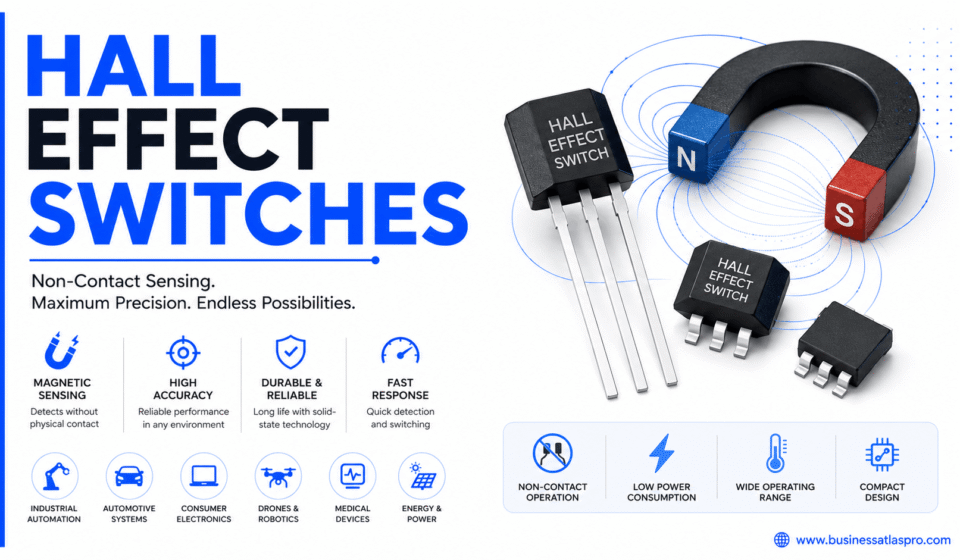
Hall effect switches use magnets and sensors instead of physical contacts. Traditional mechanical switches rely on metal contacts touching together. That’s how the keyboard registers your keypress.
But Hall effect switches work differently entirely. A magnet moves closer to a sensor as you press. The sensor detects the magnetic field strength changing.
This phenomenon is based on the Hall effect, discovered way back in 1879. Edwin Hall found that magnetic fields affect electric current flow. That principle now powers modern keyboard technology.
No physical contact means no metal wearing down over time. Your keypress gets detected purely through magnetic field changes. This creates a fundamentally different switch experience.
I’ve noticed that hall effect switches feel smoother somehow. There’s less friction during the keypress travel. It’s subtle, but once you notice it, you can’t unnotice it.
How Hall Effect Switches Actually Work
Inside each switch sits a small magnet attached to the stem. Below that sits a Hall sensor on the circuit board. When you press the key, the magnet moves downward.
As the magnet gets closer, the sensor detects increasing field strength. This data gets converted into an electrical signal. The keyboard’s controller interprets this as a keypress.
The cool part? This happens at variable depths, not just one point. Traditional switches trigger at a fixed actuation point always. It can trigger anywhere along the travel.
This is called “analog input” in gaming circles. Wooting, one of the pioneers in this space, popularized this feature. Their switches let you adjust actuation points per key.
So you could set one key to trigger super early. And another key could require a full press down. This level of customization wasn’t possible with mechanical switches before.
Some Hall effect switches also support “rapid trigger” modes. This means the key resets the moment you start releasing. No need to fully release before pressing again.
For competitive gaming, this shaves milliseconds off response times. Whether that matters depends on what games you play honestly.
Hall Effect Switches Vs. Traditional Mechanical Switches
Mechanical switches have dominated keyboards for decades now. Brands like Cherry MX basically built the modern mechanical keyboard market. They’re reliable, widely available, and well understood.
But mechanical switches wear out eventually. The metal contacts degrade after millions of keystrokes. Eventually, double inputs or missed inputs start happening.
Hall effect switches don’t have this contact wear issue. Since nothing physically touches, there’s theoretically no wear from switching itself. The magnet and sensor just don’t degrade the same way.
Sound is another difference worth mentioning. It tends to feel quieter generally. There’s less mechanical clatter from contact points colliding.
But mechanical switches offer more variety in feel. Clicky, tactile, and linear options have existed for years. Hall effect options are still catching up in variety.
Price is also a factor here. Hall effect keyboards tend to cost more upfront. The sensor technology adds manufacturing complexity and cost.
Why Gamers Are Switching To Hall Effect Switches
Competitive gaming communities pushed Hall effect switches into the mainstream. The adjustable actuation points offer real gameplay advantages. Faster response times can matter in fast-paced games.
Rapid trigger technology specifically helps with quick direction changes. Games like Counter-Strike reward split-second movement adjustments. PC Gamer has covered this extensively in their keyboard reviews.
But it’s not just about competitive edge. Many gamers simply prefer the smoother feel. The lack of physical contact creates a different tactile experience.
Durability matters for heavy users too. Streamers and gamers who type constantly appreciate longevity. Fewer worn-out switches means less maintenance over time.
In my experience, the customization options took some getting used to. I spent an evening adjusting actuation points per key. But once dialed in, it genuinely felt more responsive.
That said, casual users might not notice huge differences. If you’re typing emails and browsing, mechanical switches work fine. The benefits show up most in gaming-specific scenarios.
Are Hall Effect Switches Good for Typing Too?
Yes, though the benefits are different for typing versus gaming. Typists generally care about feel, sound, and consistency. Hall effect switches deliver consistency particularly well.
Since there’s no contact wear, the feel stays consistent longer. Mechanical switches can develop slight inconsistencies over years of use. Hall effect switches theoretically maintain their feel better.
Some typists report a smoother, more linear feel overall. There’s less “scratchiness” that some mechanical switches develop. This comes down to the magnetic actuation method.
However, tactile feedback differs from traditional switches. If you love the distinct “click” of certain mechanical switches, a hall effect might feel different. It’s worth trying before fully committing if possible.
Noise levels also appeal to office workers and shared spaces. Quieter operation means less disturbance to people nearby. This makes it popular for open offices too.
Real Scenario: My Switch From Mechanical To Hall Effect
I’d used Cherry MX Red switches for almost five years. They were reliable, but I started noticing inconsistencies. Some keys felt different from others after heavy use.
So I tried a Hall effect keyboard during a gaming sale. Initial setup took longer than expected, honestly. Adjusting actuation points required some trial and error.
After a week, typing felt noticeably smoother. Gaming performance improved slightly too, though subtly. The rapid trigger feature helped with quick movement adjustments specifically.
Two years later, the switches still feel identical to day one. No inconsistencies, no scratchiness, nothing. That consistency alone justified the upgrade for me.
But my partner tried the same keyboard and still preferred mechanical. She liked the tactile bump feeling more. So personal preference plays a huge role here too.
Pros And Cons
Pros:
No contact wear means longer-lasting consistency. Adjustable actuation points offer real customization. Rapid trigger benefits competitive gaming scenarios.
Quieter operation suits shared workspaces well. A smoother keypress feel appeals to many users. Generally more durable than mechanical alternatives long-term.
Cons:
Higher price point compared to standard mechanical keyboards. Fewer switch variety options currently available. Some users miss tactile mechanical feedback specifically.
Software setup required for full customization features. Not all games benefit equally from rapid triggers. And availability is still more limited than mechanical options.
Frequently Asked Questions
Do Hall effect switches need special keyboards?
Yes, the keyboard’s circuit board needs Hall sensors built in. You can’t simply swap mechanical switches for Hall effect ones.
Are Hall effect switches more expensive?
Generally yes, due to sensor technology and manufacturing complexity. Expect to pay a premium over standard mechanical keyboards.
Do Hall effect switches wear out at all?
The magnet and sensor don’t wear from contact. But other components like keycaps and stabilizers still degrade normally.
Can I adjust actuation points on any Hall effect keyboard?
Not always. Some budget hall effect keyboards skip this feature entirely. Check specifications carefully before buying for this reason.
Wrapping Up
Hall effect switches represent a genuine shift in keyboard technology. They’re not just marketing hype or a passing trend. The magnetic sensing method offers real durability and customization benefits.
Whether they’re worth it depends on your usage. Competitive gamers and heavy typists benefit most clearly. Casual users might not notice dramatic differences day to day.
If you’re curious, try one before fully committing. The feel is different enough that personal preference matters a lot. But for many people, once you try the Hall effect, going back feels strange.