
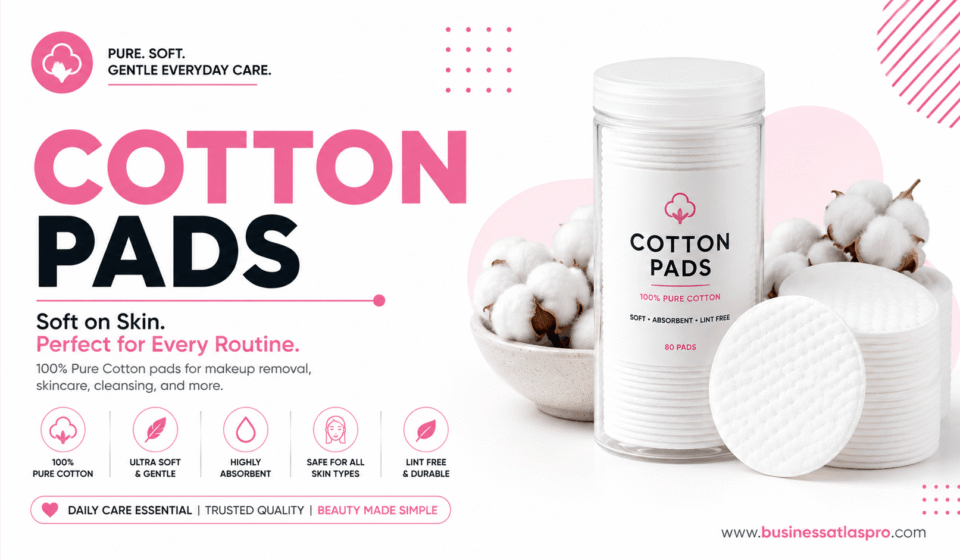

Most people grab cotton pads without giving them much thought — they’re just those white fluffy discs in the bathroom cabinet, right? But once you start paying attention, you realize they’re not all the same. The type you use actually affects how well your skincare routine works. And some cotton pads are genuinely better than others for specific tasks.
Let me walk you through what actually matters here.
What Cotton Pads Are and Why They Matter
Cotton pads are small, flat, absorbent discs used primarily in skincare routines. They apply toners and micellar water, remove makeup, hold skincare products against the skin, and deliver gentle exfoliation. Simple concept — but the execution varies a lot between products.
The basic structure is compressed cotton fiber, either natural, organic, or blended with synthetic materials. That structure determines how soft they feel, how much product they absorb, and whether they leave fibers on your skin.
Cotton as a material is naturally soft, hypoallergenic, and absorbent — properties that make it well-suited for contact with facial skin. But processing and additives change those properties significantly. A heavily bleached, chemically treated cotton pad is a different product from an unbleached organic one, even if they look similar in the bag.
That distinction matters more if your skin is sensitive or reactive. For most people, standard cotton pads work perfectly well. But understanding the options helps you make a better choice for your specific skin.
The Main Types of Cotton Pads
Not all cotton pads are built for the same job. There are a few distinct categories worth knowing.
Flat Smooth Pads
The most common type. These have a smooth surface on at least one side and are used for applying liquid products—toners, essences, micellar water, and liquid exfoliants. They don’t disrupt the skin’s surface and work well for anyone with sensitive or reactive skin.
The smooth surface is also why these are the go-to for removing eye makeup. Less friction around the delicate eye area is always the right call.
Textured or Embossed Pads
These have a slightly raised or woven texture on one side. That texture adds gentle friction, which helps lift away dead skin cells alongside product application. They’re a low-key exfoliation tool built into a regular skincare step.
Dermatologists often recommend mild physical exfoliation a few times per week for most skin types. A textured cotton pad used with a gentle toner accomplishes this without the risk of over-exfoliating that comes with harsh scrubs.
Dual-Sided Pads
These combine both surfaces—smooth on one side, textured on the other. They’re practical and versatile. Use the smooth side for eye makeup removal or sensitive-skin steps; flip to the textured side for toner application with light exfoliation.
In my experience, dual-sided pads are the most useful option for people who want flexibility without buying two separate products.
Organic and Unbleached Pads
Made from certified organic cotton without chemical bleaching or synthetic processing. These tend to be softer, produce less lint, and are better suited for skin that reacts to conventional cotton products.
Organic cotton production avoids pesticides and synthetic fertilizers, which some people consider important from both a health and environmental perspective. For everyday skincare use, the practical difference between organic and conventional cotton pads is most noticeable in softness and lint reduction.
How to Use Cotton Pads Effectively
This sounds basic, but technique genuinely affects results. A few small adjustments make cotton pads more effective and less wasteful.
For Toner and Liquid Product Application
Saturate the pad properly — don’t skimp. A half-soaked pad drags across skin rather than gliding. That dragging creates unnecessary friction and irritation, particularly around the eye area.
Swipe in one direction rather than back and forth. Upward and outward strokes align with the direction dermatologists recommend for product application — they work with the skin rather than creating downward drag that contributes to sagging over time.
For toners specifically, the American Academy of Dermatology notes that applying with a cotton pad can be more hygienic than using hands, particularly for people prone to breakouts. Your hands carry bacteria that you’d rather not transfer to your face during a skincare routine.
For Makeup Removal
Press and hold before wiping. For heavy eye makeup especially, saturate the pad with micellar water or makeup remover, press it gently against closed eyes for 10–15 seconds, and then wipe. The soaking time dissolves the makeup and means you need far less friction to remove it.
This matters because rubbing aggressively at eye makeup — particularly waterproof formulas — stresses the delicate skin around the eye. Less friction, longer hold time, gentler removal.
For Spot Application
Cotton pads work well for targeted skincare too. Fold one in half or quarter it to apply a targeted treatment—a salicylic acid spot solution, a brightening essence on a specific area, or a soothing product on a reddened patch.
This gives you more control than using a full pad and wastes less product on areas that don’t need it.
Choosing the Right Cotton Pads for Your Skin Type
The right choice depends on what your skin actually needs, not on what looks most premium on a shelf.
Sensitive and Reactive Skin
Go for flat, smooth cotton pads from organic or unbleached cotton. Avoid textured pads for daily use—the added friction, even gentle, can trigger irritation in reactive skin. Look for pads that are fragrance-free and haven’t been treated with additional chemicals.
Lint is a real issue here too. Cheap cotton pads shed fibers that stick to skin and clog pores. Higher-quality pads — even if not organic — tend to have tighter fiber structures that don’t shed as much.
Oily and Acne-Prone Skin
Textured or dual-sided cotton pads are genuinely useful here. The light exfoliation from a textured surface helps prevent the buildup of dead skin cells that contributes to congestion and breakouts.
Pairing a textured pad with a toner that contains salicylic acid — a beta-hydroxy acid proven to penetrate pores and reduce acne — gives you a two-step benefit in one routine step. The texture helps the product work more effectively by removing surface buildup first.
Dry and Mature Skin
Smooth, soft pads are the better choice. Dry skin doesn’t need additional exfoliation from a textured surface. The priority is gentle application of hydrating toners and essences without stripping what little moisture the skin is holding.
For mature skin, the press-and-hold technique mentioned above is especially useful. Holding a soaked pad against the face for 20–30 seconds lets the product absorb more deeply than a quick swipe across the surface.
The Environmental Angle on Cotton Pads
Disposable cotton pads are convenient, but the environmental math adds up. A person using two cotton pads daily gets through roughly 700 pads per year. Multiply that across millions of users, and the waste volume is significant.
Reusable cotton pads have become a mainstream alternative. These are made from organic cotton, bamboo, or microfiber and can be washed and reused dozens of times. They’re typically sold in sets of 10–20 with a small laundry bag for washing.
The tradeoff is convenience versus sustainability. Reusable pads require washing, and they need to be dried thoroughly to prevent mildew. But their long-term environmental footprint is dramatically lower than disposables, and the per-use cost drops significantly after the first few weeks.
Brands like LastObject and Bambaw have made reusable cotton rounds popular in sustainable beauty circles. They perform comparably to disposable cotton pads for most skincare applications — the main adjustment is rinsing and storing them after each use.
If switching fully to reusables feels like too much change at once, a hybrid approach works well. Use disposable cotton pads for makeup removal—which involves heavier soiling—and reusable rounds for product application steps where the pad stays cleaner.
What to Avoid When Buying Cotton Pads
A few things in the ingredient or manufacturing list are worth steering clear of, especially for regular face use.
Synthetic fiber blends — Some budget cotton pads blend polyester or rayon with cotton to cut costs. These are less absorbent, shed more lint, and feel rougher against skin. Check the fiber content if you’re unsure.
Heavy chemical processing—conventional cotton is one of the most pesticide-intensive crops in the world. And the bleaching process used to make pads white can leave trace chemical residues. For everyday face use, this is worth considering—look for pads labeled chlorine-free or peroxide-bleached rather than chlorine-bleached.
Very cheap bulk packs—budget cotton pads often sacrifice fiber quality to hit a low price point. The result is pads that fall apart mid-use, shed lint onto your face, and absorb product unevenly. Spending a little more on a quality brand is genuinely noticeable in daily use.
Brands like Shiseido, DHC, and Muji have strong reputations for cotton pad quality in the skincare community. Muji’s flat cotton pads in particular have built a loyal following for their softness and low-lint construction.
Making Your Cotton Pads Last Longer
This is practical rather than environmental—cotton pads can be used more efficiently with a couple of habits.
Cut them in half. For toner application on small areas or targeted steps, half a pad does the same job as a full one. You get twice the uses from the same pack.
Fold rather than crumple. Folding a pad in quarters creates a cleaner edge for precise application around eyes or lips. Crumpling wastes surface area and uses the product less efficiently.
Use both sides. If you’re applying a gentle toner, flip the pad halfway through. The second side is still clean and absorbent.
These are small habits, but they add up. A pack of cotton pads that would normally last a month stretches significantly longer when you’re using each one fully.
Cotton pads aren’t the most glamorous part of a skincare routine, but they’re one of the most used. Getting the right type for your skin, using them correctly, and choosing quality over the cheapest option make a quiet but real difference in how your routine performs every day.