
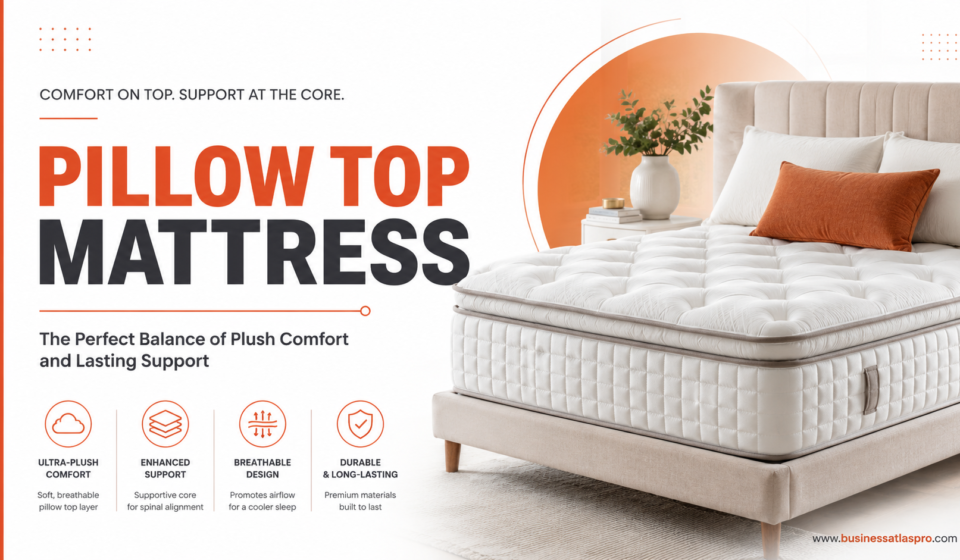

There’s a reason hotel beds feel so good. A lot of them use a pillow-top mattress. That extra layer of cushioning on top is what makes you sink in just enough to feel like you’re sleeping on a cloud. But before you run out and buy one, there’s a lot worth knowing. Not every sleeper loves them equally.
Let’s walk through it properly.
What Makes a Pillow-Top Mattress Different
The defining feature is the sewn-on top layer. It’s an extra padding panel stitched directly to the mattress surface. You can see the seam running around the edge where the top layer meets the main body of the mattress.
That top layer is typically filled with one or more comfort materials. Common fillings include memory foam, latex, fiberfill, wool, or cotton. The combination determines how the mattress feels — and how it holds up over time.
What separates a pillow-top mattress from a standard mattress is that cushioning layer is permanent. It’s not a separate topper you add on. It’s built in. That affects both comfort and longevity in ways worth understanding before you buy.
The underlying mattress structure can vary widely. You’ll find pillow-top versions of innerspring, hybrid, and even some foam mattresses. The pillowtop is really about the feel at the surface—the support system underneath is a separate conversation.
According to the Sleep Foundation, pillow-top mattresses tend to rate well for pressure relief and initial comfort, but their long-term durability depends heavily on the quality of materials used in that top layer.
Pillow Top vs. Euro Top: What’s the Difference?
This question comes up constantly. And it’s a fair one—they look nearly identical from a photo.
The difference is in how the top layer is attached and positioned.
A pillow top has a small gap between the edge of the top layer and the edge of the mattress. That gap is visible. The cushioning sits on top with a slight overhang feel. It gives a softer, plusher appearance.
A Euro top has the cushioning layer flush with the mattress edge. No visible gap. The top layer is sewn in line with the mattress sides. This tends to feel slightly firmer and holds its shape better over time.
For most sleepers, the functional difference is minor. But Euro tops are generally considered more durable. The flush construction is less prone to sagging at the edges. If longevity matters to you, that’s worth factoring in.
Both are a type of pillow-top mattress in the broader sense—they both add a cushioned top layer to the base mattress. But technically, they’re distinct constructions with different performance characteristics.
Who Actually Benefits From a Pillow-Top Mattress
Not everyone sleeps better on a softer surface. Knowing who this mattress suits best saves you from a costly mistake.
Side sleepers tend to love a pillow-top mattress. Sleeping on your side creates pressure points at the shoulder and hip. The cushioned top layer relieves that pressure. You’ll feel the difference, especially in the morning.
People with joint pain or arthritis often find the soft top layer reduces nighttime discomfort. The Arthritis Foundation recommends mattresses that reduce pressure on sensitive joints. A good pillow-top mattress addresses exactly that.
Lightweight sleepers — generally under 130 pounds — tend to prefer softer surfaces. They don’t compress the mattress deeply enough to benefit from firmer options.
Combination sleepers who shift positions during the night also do well here. The cushioned surface adapts across different body positions without feeling punishing.
Who Should Think Twice About a Pillow-Top Mattress
This matters as much as knowing who it suits.
Stomach sleepers often struggle. A soft top layer lets the midsection sink too deep. That misaligns the spine. Over time, that causes lower back discomfort rather than relieving it.
Heavier sleepers — generally over 230 pounds — may compress the pillow top layer too quickly. It can develop body impressions faster, reducing the mattress’s effective life.
People who run hot at night need to be careful. The extra material in a pillow-top mattress can trap heat. Memory foam pillow tops are especially prone to this. Look for gel-infused foam or breathable fiberfill if heat is a concern.
Back pain sufferers are a mixed group. Some find the softness comforting. Others find they need firmer support to keep the spine properly aligned. If you have an existing back condition, testing in-store or finding a brand with a generous trial period is worth it.
Understanding Pillow Top Mattress Construction
The quality of a pillow-top mattress depends heavily on what’s inside that top layer. And the base underneath matters just as much.
Top Layer Materials
Memory foam: Conforms closely to the body. Great for pressure relief. Can sleep warm without cooling additives.
Latex: Naturally responsive and cooler than memory foam. More durable than most synthetic fillings. Latex pillow tops tend to last longer.
Fiberfill (polyester): The most common budget option. Feels soft initially. Compresses and loses its loft faster than foam or latex.
Wool or cotton: Natural, breathable, and temperature-regulating. Often found in higher-end pillow-top options. Tends to feel more neutral — not dramatically soft, but consistently comfortable.
Base Mattress Types
An innerspring base gives a traditional bouncy feel. Coil support systems provide strong edge support and good airflow. A hybrid base — coils plus foam layers — adds both bounce and contouring. A foam base without coils is less common in pillow-top mattresses but does exist.
The base determines how supportive the mattress is beneath that soft surface. A pillow top on a weak coil system gives you softness without real support. That’s a recipe for back problems and a mattress that sags prematurely.
How Long Does a Pillow-Top Mattress Last?
This is one of the most important questions. And the honest answer is it depends.
A quality pillow-top mattress with a good base and high-density foam in the top layer can last 7 to 10 years. A budget version with polyester fiberfill might feel noticeably worn within 3 to 5 years.
The top layer is almost always the first thing to go. It’s what absorbs the most pressure night after night. Once it develops body impressions deeper than about an inch, comfort drops significantly.
You can extend the life by rotating the mattress regularly. Every 3 to 6 months is the standard recommendation. Some pillow-top mattresses are one-sided—they can’t be flipped. But rotating head-to-foot distributes wear more evenly.
A mattress protector also helps. It keeps the top layer clean and prevents moisture from breaking down the materials. The National Sleep Foundation recommends replacing mattresses every 7 to 10 years — though quality varies enough that some need replacing sooner.
What to Check Before Buying a Pillow Top Mattress
A few specifics make the difference between a good purchase and a frustrating one.
ILD rating of the top layer. ILD stands for Indentation Load Deflection. It measures foam firmness. A lower ILD means softer foam. Most pillow tops use ILD ratings in the 10–20 range. Higher quality foams hold their shape longer at the same ILD.
Foam density. For memory foam pillowtops, look for a density of at least 3.5 lb/cubic foot for the top layer. Lower-density foams compress faster and lose their feel more quickly.
Coil count and gauge for innerspring bases. Higher coil counts and lower gauge numbers (thicker coils) mean better support and durability. This affects how long the underlying structure holds up.
Trial period and warranty. A good pillow-top mattress should come with at least a 10-year warranty and a sleep trial of 90 days or more. The first few weeks on a new mattress can feel different as your body adjusts. A longer trial gives you real data on comfort.
Edge support. Some pillow-top mattresses have weak edges. If you sit on the edge of the bed regularly or sleep near the edge, test this or check reviews specifically for edge support feedback.
Tips for Caring for a Pillow Top Mattress
Once you’ve got one, a little maintenance goes a long way.
Rotate it every three months. This is the single most effective thing you can do to extend its life. Mark which end is which so you don’t lose track.
Use a quality mattress protector from day one. A waterproof but breathable cover protects the top layer from moisture, oils, and allergens. I’ve noticed that people who skip the protector almost always regret it—especially if they have kids or pets.
Avoid jumping or applying uneven pressure repeatedly in one spot. The pillowtop layer is less resilient to point pressure than the base mattress.
When cleaning, spot clean only with a mild detergent and cold water. Don’t soak the mattress. Let it dry completely before putting sheets back on. Moisture trapped inside a pillow top layer can cause mold and material breakdown.
Vacuum the surface occasionally using an upholstery attachment. This removes dust, skin cells, and allergens that accumulate in the soft top layer over time.
Pairing a Pillow-Top Mattress With the Right Foundation
The foundation matters more than most people realize. A pillow-top mattress on the wrong base can sag, feel unsupported, or void the warranty.
Box springs work well with innerspring-based pillow tops. Solid platform bases work with most types. Slatted bases need slats no more than 3 inches apart to provide adequate support.
Adjustable bases are compatible with some pillow-top mattresses—but not all. Check the manufacturer specs before pairing. A rigid pillow top layer won’t flex comfortably on an adjustable base.
The Better Sleep Council advises replacing your foundation at the same time as your mattress if the old foundation shows any signs of wear. A new mattress on a worn foundation is a waste of money.
A pillow-top mattress is a solid investment when matched to the right sleeper and maintained properly. Get the construction right and understand your sleeping style, and it’ll be one of those purchases you don’t regret for years.