
Most people who pick up a racket for the first time don’t think twice about the ball they’re hitting. But tennis, the tennis ball, is far more dependent on that small yellow sphere than beginners realize. The type of ball you use affects how fast the game plays, how easy it is to learn, and whether you’re actually getting a competitive experience or a frustrating one.
Let me break this down practically.
Why the Ball Matters More in Tennis Ball Tennis Than You’d Think
The ball is the center of everything in tennis. It’s the one piece of equipment both players share. And unlike a racket—where personal preference drives the choice—the ball affects the entire dynamic of play between two people.
A ball that’s too fast makes rallying nearly impossible for beginners. One that’s too slow feels dead and unrewarding for experienced players. One that’s worn out plays completely differently from a fresh one. These aren’t minor differences. They fundamentally change how a tennis ball tennis feels and what skills it develops.
The International Tennis Federation governs ball specifications for competitive play. Approved balls must meet specific standards for size, weight, bounce, and deformation. The diameter sits between 6.54 cm and 6.86 cm. Weight ranges from 56.0g to 59.4g. Those tolerances are tight because small variations genuinely change play.
What’s Inside a Tennis Ball Tennis
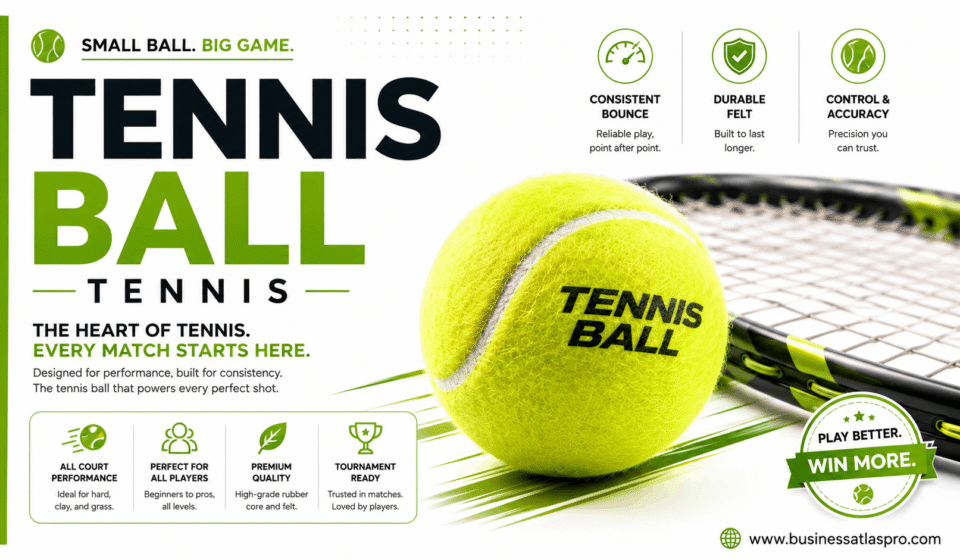
A tennis ball has two main components: a pressurized rubber core and a woven felt exterior. The core holds compressed air—typically around 14 psi above atmospheric pressure in a new ball. That internal pressure creates the bounce.
The felt exterior is made from a blend of wool and nylon fibers. It creates aerodynamic drag that slows the ball in flight and controls how it interacts with the court surface. Without felt, a smooth rubber ball would fly off strings unpredictably and bounce erratically.
These two elements work together. Damage or wear to either one changes how the ball performs in tennis ball tennis significantly.
The Different Types of Tennis Balls in Play
Not every yellow ball is the same. There are several distinct categories, each designed for a different context.
Pressurized Balls
These are the standards for recreational and competitive tennis ball tennis. They come sealed in pressurized cans to maintain their bounce during storage. Once opened, they start losing pressure gradually.
A fresh pressurized ball from a new can bounces crisply and feels lively off the strings. Most players notice a difference in feel within a few hours of play. After 3–4 hours of singles, the ball has typically lost enough pressure and shed enough felt to play noticeably differently.
This is why professional matches use new balls frequently. Wimbledon changes balls every nine games after the first seven, accounting for the warm-up set. The US Open and Australian Open follow similar protocols. Consistency in ball performance matters enormously at that level.
Pressureless Balls
These don’t rely on internal air pressure for their bounce. Instead, the rubber core itself is denser and more rigid. They bounce from the core material rather than compressed air.
The tradeoff: they don’t go dead. A pressureless ball used for months plays almost identically to a fresh one. That makes them popular for practice machines, teaching pros, and players who want consistent performance over time without frequently buying new cans.
But pressureless balls feel heavier and less lively than fresh pressurized balls. For match-quality pressurized tennis ball tennis, most players prefer them. For drilling against a ball machine or practicing your serve alone, pressureless is genuinely more practical.
Stage Balls for Beginners
The ITF’s Play Tennis development program uses a color-coded system of modified balls for new players and juniors. These aren’t gimmicks — they’re evidence-based tools for learning.
Red balls — 75% slower than standard. Used on mini courts for beginners aged 8 and under. The slower speed gives new players time to set up and swing properly.
Orange balls — 50% slower. Slightly larger court, short rackets. For players around 8–10 years old.
Green balls are 25% slower. Full court, regular rackets. The bridge to standard adult tennis.
These modified balls make learning tennis balls tennis learnable for beginners. Throwing a new player onto a court with standard pressurized balls and expecting them to rally consistently is a fast path to frustration. The stage system changes that experience dramatically.
How Court Surface Affects Tennis Ball Tennis
The ball doesn’t perform in isolation. The surface you’re playing on changes everything about how a ball bounces, skids, and wears.
Hard Courts
Hard courts — the surface used at the US Open and Australian Open — give a medium-paced, consistent bounce. The ball bounces true, meaning it comes off the court at a predictable angle and height.
Hard courts wear felt off the ball faster than grass. The abrasive surface shreds the fibers with every bounce. On a hard court, balls noticeably lose their felt texture within 1–2 hours of play. The worn felt makes the ball faster and lower-bouncing as play progresses.
Clay Courts
Clay slows the ball significantly. It grabs the felt and creates high, looping bounces. This is why clay court tennis ball tennis produces longer rallies and a more physical, baseline-oriented game.
Clay is also gentler on the ball’s felt. The soft surface doesn’t abrade fibers as aggressively. Balls last longer on clay in terms of felt condition — though they do pick up clay dust that adds weight and changes the bounce over time.
Grass Courts
Grass creates a fast, low, skidding bounce. The ball stays low after landing, rewarding flat, aggressive striking and serve-and-volley play. Wimbledon’s grass courts are maintained to precise specifications to ensure consistent play.
On grass, balls wear differently again — the felt picks up grass staining and moisture, which affects weight and bounce in ways that are less predictable than on hard courts or clay.
How to Know When a Tennis Ball Tennis Is Past Its Prime
This is something I’ve noticed players get wrong all the time. They keep playing with dead balls long after they should have been replaced, then wonder why their tennis ball tennis feels flat and unrewarding.
Here are the signs a ball needs replacing:
The squeeze test. Squeeze the ball firmly in your palm. A fresh pressurized ball has noticeable resistance. A dead ball compresses too easily. If it gives like a stress ball, it’s done.
The bounce test. Drop the ball from shoulder height onto a hard floor. According to ITF specifications, a ball should bounce between 53–58 inches when dropped from 100 inches. You don’t need to measure precisely — a flat, low bounce from head height is obvious.
Visual inspection. Look at the felt. Heavily pilled, bald patches, or significant discoloration all indicate a worn ball. The felt’s aerodynamic role is compromised when it’s badly worn.
The sound test. A fresh ball makes a crisp, resonant thwack off the strings. A dead ball sounds dull and hollow. Players who hit regularly develop an ear for this distinction quickly.
For casual recreational tennis ball tennis, replacing balls every 3–4 playing sessions is a reasonable guideline. For weekly players, one or two fresh cans per month keeps play quality consistent.
Choosing the Right Ball for Your Game
Walk into a sporting goods store and you’ll see multiple brands and categories. Here’s how to navigate that without overthinking it.
For Recreational Play
Standard pressurized balls from established brands — Wilson, Penn, Dunlop, Babolat—all perform well. The differences between brands at this level are minor. Buy what’s on sale.
One practical tip: buy in bulk. Balls sold in packs of 18 or 24 cost significantly less per ball than buying individual cans. If you play regularly, stocking up makes financial sense.
For Practice and Drilling
Pressureless balls are worth the investment. A bucket of 50–60 pressureless balls stays usable for months of drilling, serving practice, or ball machine use. They’re not ideal for a match-quality feel, but for building stroke mechanics, they’re perfectly adequate.
For Kids Learning the Game
Follow the stage system. A child learning tennis ball tennis on age-appropriate balls builds technique properly. Too many juniors start with standard balls and develop bad habits — swinging too hard, losing patience with short rallies — because the ball moves faster than their developing skills can handle.
For High Altitude
Standard pressurized balls bounce higher at altitude because lower air pressure reduces drag. Specific high-altitude balls are available — they have lower internal pressure to compensate. If you’re playing regularly above 4,000 feet, these make a real practical difference in tennis ball tennis playability.
Tennis Ball Tennis: Storing Balls to Extend Their Life
Once a can is opened, the ball immediately begins losing pressure. You can’t stop that entirely, but you can slow it.
Pressurizer canisters — resealing tubes that add pressure back to used balls — do work to a degree. They won’t restore a fully dead ball, but they extend the useful life of slightly used balls that still have some bounce remaining.
Storing balls in a cool, dry environment helps too. Heat accelerates pressure loss. Leaving balls in a hot car trunk between sessions shortens their lives measurably.
Tennis ball tennis rewards players who pay attention to their equipment. That includes the ball. Arriving at a match with a fresh can versus playing with a set of dead balls from three weeks ago is a different experience entirely — and not a subtle one.