
Shop Pour Over Coffee Makers: A Real Buyer’s Guide
Meta description: Ready to shop pour over coffee makers? Here’s what actually matters—materials, sizing, brewing technique, and honest picks from someone who’s tried plenty.
I used to think all coffee makers were basically the same. Then a friend introduced me to pour over brewing one weekend. Now I shop pour over coffee makers like it’s a hobby.
The flavor difference shocked me honestly. It’s cleaner, brighter, and way more nuanced than drip coffee. So let’s talk about what actually matters when choosing one.
Why People Shop Pour Over Coffee Makers In The First Place
Pour over brewing gives you complete control. You decide the water temperature, pour speed, and brew time. That control translates directly into flavor differences.
Drip machines automate everything for convenience. But automation often means inconsistency too. Water temperature fluctuates, and timing isn’t always precise.
With pour over, you’re the variable that matters most. James Hoffmann, a well-known coffee expert, has talked extensively about this control factor. His videos helped me understand brewing fundamentals significantly.
The setup cost is also lower generally. Most pour over devices cost $10-40. Compare that to $100+ for decent drip machines.
I’ve noticed that pour over also slows down my morning routine. It’s become a small ritual rather than just caffeine delivery. That’s honestly part of the appeal for me now.
Types Of Pour Over Devices Worth Knowing
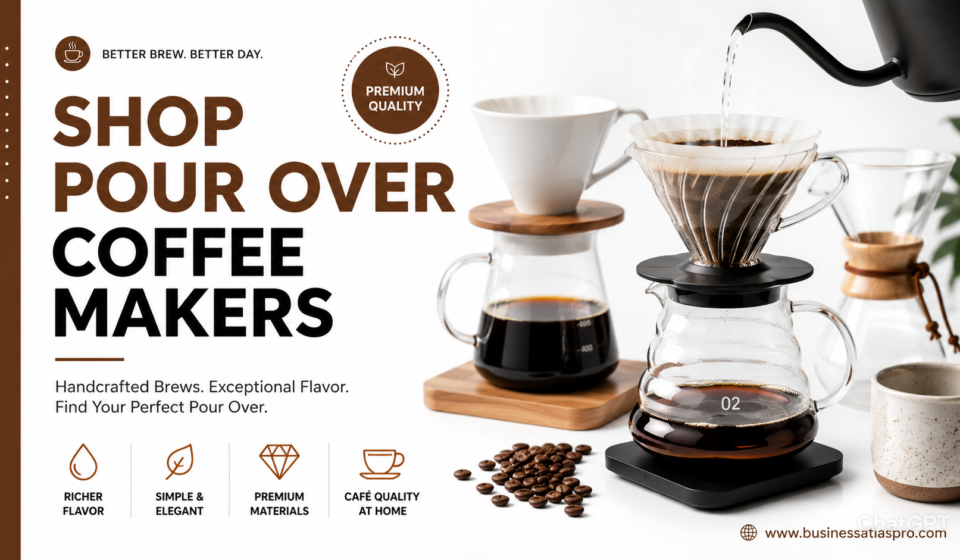
Hario V60 is probably the most recognized name. It’s a cone-shaped dripper with spiral ridges inside. These ridges help control water flow during brewing.
Hario makes these in ceramic, plastic, and glass versions. Ceramic retains heat better but costs more. Plastic is budget-friendly and more durable for travel.
Chemex combines brewer and carafe in one piece. It uses thicker filters than most other methods. This produces a cleaner cup with less sediment.
Kalita Wave has a flat-bottom design instead of cone-shaped. This creates more even extraction supposedly. Beginners often find it more forgiving than V60.
AeroPress technically isn’t pour over, but it’s worth mentioning. It’s more forgiving and portable. Many beginners start here before moving to traditional pour over.
Each device produces noticeably different flavor profiles. Cone shapes tend toward brighter, more acidic notes. Flat-bottom designs often produce fuller-bodied cups.
What To Consider Before You Shop Pour Over Coffee Makers
Material choice affects both price and performance. Ceramic retains heat longest but breaks if dropped. Glass looks elegant but also shatters easily.
Stainless steel is nearly indestructible and budget-friendly. But it doesn’t retain heat as well as ceramic. For travel or camping, steel makes more sense.
Size matters based on how much coffee you drink. Single-cup devices work for solo coffee drinkers. Larger devices like Chemex suit households or guests.
Filter compatibility is something people often overlook. Some devices use proprietary filters that cost more. Others use standard filters available everywhere.
Wirecutter tested numerous pour over devices for ease of use. Their reviews helped me narrow down options initially. I’d recommend checking reviews before committing to one brand.
Budget realistically too. You’ll also need a grinder, scale, and kettle eventually. The dripper itself is just one piece of the puzzle.
How To Actually Brew With A Pour Over Coffee Maker
Start with freshly ground coffee, ideally medium-coarse. Pre-ground coffee loses flavor within days of opening. A burr grinder makes a huge difference here.
Use roughly 1 gram of coffee per 15-17 grams of water. This ratio works for most pour over methods generally. Adjust based on your taste preferences over time.
Water temperature should sit around 195-205°F. Boiling water can scorch coffee grounds slightly. Let boiled water rest for 30 seconds before pouring.
The “bloom” step matters more than people realize. Pour a small amount of water first. Let it sit for 30-45 seconds before continuing.
This releases trapped gases from the coffee grounds. Specialty Coffee Association has detailed brewing standards covering this process. Skipping the bloom can result in uneven extraction.
Continue pouring in slow, circular motions afterward. Total brew time usually runs 2.5-4 minutes. Faster isn’t always better here.
Real Scenario: My First Pour Over Disaster
My first attempt was genuinely terrible. I poured too fast and used pre-ground supermarket coffee. The result tasted weak and slightly bitter somehow.
So I researched proper technique online for an hour. Then I bought a basic burr grinder the next day. The difference was immediate and dramatic.
My second attempt used freshly ground beans and slower pouring. The flavor was noticeably sweeter and more complex. I could actually taste different notes for the first time.
That experience taught me something important. The dripper matters less than people think initially. Fresh grounds and proper technique matter way more.
Now when friends ask me to shop pour over coffee makers with them, I emphasize this. Don’t overspend on the device. Spend on good beans and a decent grinder instead.
Pros And Cons Of Pour Over Brewing
Pros:
You get complete control over brewing variables. The flavor clarity beats most drip coffee easily. Initial equipment costs are relatively low.
Cleanup is simple with most devices. It’s portable enough for travel or camping. And the brewing ritual itself feels satisfying somehow.
Cons:
It takes more time than pressing a button. Consistency requires practice and attention to detail. You’ll need additional equipment like scales and grinders.
Brewing only one or two cups at once is typical. For larger groups, it becomes impractical quickly. And there’s a learning curve before you get consistent results.
Pour Over Vs Drip Coffee Makers
Drip machines win on convenience and capacity. You can brew a full pot while getting ready. Pour over requires your active attention throughout.
But flavor quality often favors pour over significantly. The manual control allows for better extraction. Drip machines sometimes under-extract or over-extract inconsistently.
Cost-wise, pour over wins long-term. No need to replace heating elements or pumps. Most pour over devices last years without issues.
For daily convenience, drip makes sense for busy households. For weekend rituals or coffee enthusiasts, pour over delivers more satisfaction. Many people, including myself, end up owning both.
Frequently Asked Questions
What’s the best pour over coffee maker for beginners?
Kalita Wave or Hario V60 are both beginner-friendly. The Wave’s flat bottom forgives inconsistent pouring slightly better.
Do I need a special kettle for pour over?
A gooseneck kettle helps with precise pouring control. It’s not mandatory, but it makes technique easier significantly.
How long do pour over filters last?
Paper filters are single-use only. Metal filters can be reused after rinsing thoroughly.
Can I make iced coffee with pour over?
Yes, brew directly over ice using a stronger ratio. This is sometimes called “Japanese iced coffee” method.
Final Thoughts
When you shop pour over coffee makers, focus on what matters most. Material, size, and filter availability matter more than brand prestige. The brewing technique ultimately impacts flavor more than the device itself.
Start simple, practice consistently, and don’t overspend initially. Once you nail the basics, you can experiment with different devices. And honestly, that morning ritual becomes something you’ll genuinely look forward to.
Read Also: How Big Is a King Size Bed? Full Dimensions Explained