
If you’ve ever wondered how your phone stays connected across different countries, part of the answer lies in what’s called a global active device. It’s a term that covers more ground than most people realize. And once you understand it, a lot of how modern connectivity works starts to make sense.
Let’s get into it.
What Exactly Is a Global Active Device?
The term sounds technical. But the concept is grounded in something practical.
A global active device is any electronic device that actively transmits, receives, or processes signals across international networks. The word “active” is key here. It distinguishes these devices from passive components that simply carry or block signals without processing them.
Think of it this way. A wire is passive. A router is active. A smartphone operating on international networks is a global active device. It’s doing something with the signal — not just passing it along.
In the world of telecommunications, this distinction matters a lot. Regulatory bodies track active devices separately from passive infrastructure. That affects how they’re certified, taxed, and monitored across borders.
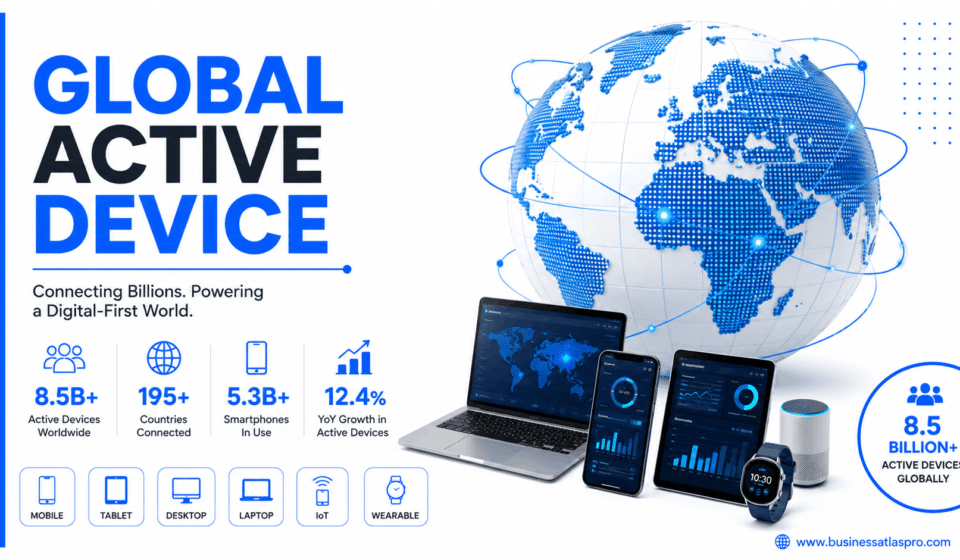
The category includes smartphones, satellite communicators, IoT modules, mobile hotspots, and connected medical devices. What they share is the ability to operate across multiple countries while actively managing data or signals.
How a Global Active Device Works
At the most basic level, it connects to a network. But doing that across countries borders involves layers of complexity.
First, the device must support multiple frequency bands. Different countries use different parts of the radio spectrum for their mobile networks. A global active device is built to handle this. It switches between bands automatically based on location.
Second, it needs a SIM card or eSIM that supports international roaming. The eSIM standard from the GSMA has made this significantly more flexible in recent years. You can now switch carriers remotely without swapping physical cards.
Third, the device communicates with network infrastructure — towers, satellites, or both — to authenticate itself and establish a connection. This happens in seconds. And it happens whether you’re in Tokyo, Toronto, or Nairobi.
The processing that happens inside the device — managing band switching, authenticating credentials, encrypting data — is what makes it “active.” It’s not just connected. It’s constantly working to stay connected properly.
Types of Global Active Device Categories
Not all global active devices look the same. The category spans several different use cases.
Consumer Devices
Smartphones are the most obvious example. A flagship phone from Apple or Samsung is designed to work across dozens of countries. It supports multiple network generations—4G, 5G—and switches between them automatically.
Mobile Wi-Fi hotspots also fall here. Devices like the Skyroam Solis are built specifically for international travelers. They connect to local networks and share that connection with nearby devices via Wi-Fi.
Industrial and IoT Devices
This is a fast-growing segment. Fleet tracking units, remote sensors, and smart meters all qualify as global active devices when they operate across international networks.
A logistics company tracking shipping containers from China to Germany relies on these devices. The container’s tracker must ping networks in multiple countries without human intervention. That’s a global active device doing its job quietly.
Medical Devices
Connected health monitors that transmit patient data internationally are increasingly common. A cardiac monitor worn by a patient traveling abroad must maintain data transmission. These devices are subject to stricter certification requirements. The FDA’s digital health guidance covers some of these requirements for the US market.
Regulatory Side of a Global Active Device
This is the part most users never think about. But it’s critical for manufacturers and businesses.
Every country has a regulatory authority that controls what devices can transmit on its airwaves. In the US, that’s the FCC. In Europe, it’s handled through the CE marking process. In many Asian markets, separate national certifications apply.
A global active device needs approval from each relevant authority for each market it enters. That process can be expensive and time-consuming. Skipping it leads to devices being blocked at customs or shut down by local regulators.
For consumers, this usually shows up as a simple label on the box—FCC ID, CE mark, and similar certifications. These are proof that the device has been tested and approved for use in that region.
I’ve noticed that many buyers completely ignore these markings when shopping online. But if you’re importing a device from another country, checking these certifications can save you from buying something that won’t legally work where you live.
Choosing the Right Global Active Device for Your Needs
The right choice depends on what you’re actually trying to do. Here’s a practical breakdown.
For international travel: You want a device with broadband support—ideally covering both sub-6GHz and mmWave 5G, plus 4G LTE fallback. eSIM support is a major plus. It lets you buy a local data plan digitally when you arrive.
For business asset tracking: Look for industrial-grade IoT modules with certified global coverage. Reliability matters more than speed here. Battery life and durability become primary factors.
For remote health monitoring: Certification is everything. The device must meet medical standards in every country where patients might use it. Don’t cut corners on this.
For general connectivity: A well-supported smartphone from a major brand is usually enough. Check that it supports the specific bands used in your destination countries. Band compatibility tools are available on most carrier websites.
Global Active Device and Network Compatibility
Band compatibility is the most common source of confusion. And it’s worth spending a moment on.
Mobile networks globally use different frequency ranges. A device that works perfectly in the US might struggle in parts of Europe or Asia. Not because the network is bad, but because the device doesn’t support the local frequencies.
The solution is a device that supports a wide range of bands. Most flagship phones now cover this well. But mid-range and budget phones sometimes cut corners on band support to reduce costs.
Before buying a global active device for international use, check the band specifications. Compare them against the bands used by carriers in your destination. Websites like KIMOVIL let you search by device and check band compatibility by country. It’s a surprisingly useful tool.
Common Mistakes People Make With Global Active Devices
A few patterns come up repeatedly when people run into problems with international connectivity.
Buying without checking band support: This is the most common one. A device looks right on paper but doesn’t support the frequencies used locally. Always verify before buying.
Ignoring roaming settings: Some devices need manual configuration to roam internationally. Check your settings before you travel. Arriving in a new country and spending an hour troubleshooting connectivity is not fun.
Forgetting about power compatibility: A global active device needs power too. Voltage and plug types vary by country. A device is only as useful as its ability to stay charged. Always check the charger’s input voltage range.
Overlooking data security: Connecting to foreign networks carries risks. Using a VPN while roaming adds an important layer of protection. Especially on public or hotel Wi-Fi networks.
Assuming automatic carrier switching: eSIM helps, but not every carrier or plan supports seamless automatic switching. Understand your plan’s terms before relying on it completely.
The Growing Role of Global Active Device in IoT
The Internet of Things has expanded what “global active device” means in practice. Billions of connected devices now operate internationally. And that number keeps growing.
A smart sensor on a shipping pallet crosses dozens of borders. A connected vehicle driving through multiple European countries switches networks constantly. An agricultural monitor in a remote field pings satellites to send crop data.
Each of these is a globally active device doing something very specific—staying connected and transmitting data across borders without human management.
The shift toward low-power wide-area networks has made this more practical for low-data, battery-powered devices. Technologies like NB-IoT and LTE-M allow small devices to communicate globally without draining power fast.
In my experience, most people don’t realize how many global active devices are already operating around them quietly. Your parcel tracker, your rental car’s GPS, the environmental monitor in a commercial building — these are all part of this ecosystem.
What the Future Looks Like
The direction is clear. More devices. More countries. More automatic switching. Less manual setup for users.
Satellite-based connectivity is pushing this further. Companies are building low-earth orbit satellite networks that let an active global device connect from virtually anywhere on the planet. No tower needed. No roaming agreement required. Just a device and a sky view.
For everyday users, this means more reliable connectivity in remote areas. For businesses, it means asset tracking and data collection from places that were simply off the grid before.
The global active device category will keep expanding. And understanding it even at a basic level puts you ahead of most people making purchasing or business decisions in this space.