
When Nike dropped the Vaporfly 4, the running community paid attention immediately. And that makes sense—this line has reshaped what fast road racing shoes look like since it first appeared. Each iteration either raises the bar or disappoints the people who believed in the last one. So where does this version land?
Let me give you a clear-eyed look at what’s actually going on with this shoe.
What the Vaporfly 4 Brings to the Table
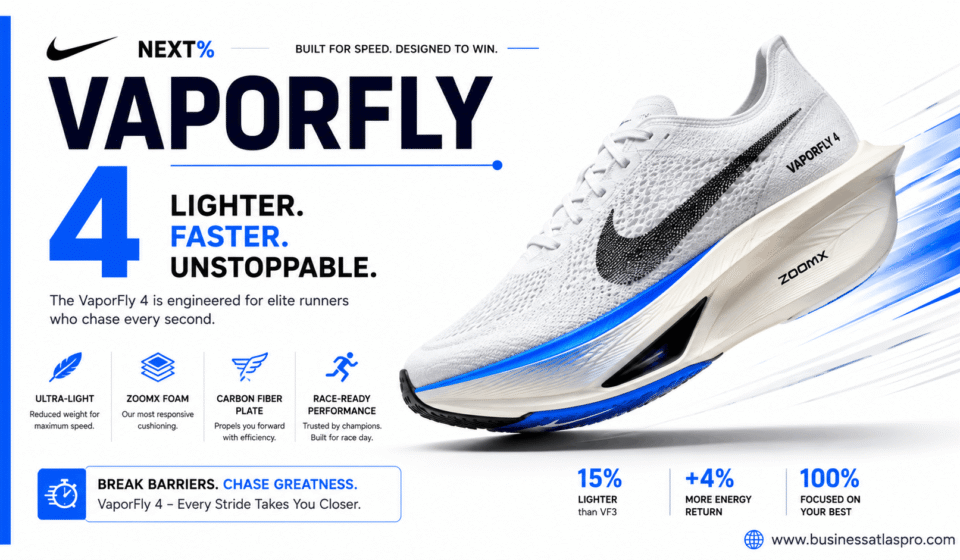
The Vaporfly line has always been built around one goal: help you run faster with less energy expenditure. The Vaporfly 4 continues that mission with refinements to the foam, the plate, and the upper.
The midsole uses Nike’s ZoomX foam—a PEBA-based compound that’s lighter and more energy-returning than standard EVA foam. ZoomX is the same material used in the Alphafly line. It compresses under impact and returns a high percentage of that energy forward. That’s what creates the springy, propulsive sensation runners describe.
Sitting inside that foam is a full-length carbon fiber plate. The plate acts as a lever during toe-off. It stiffens the forefoot and channels force efficiently through the gait cycle. Done right, this reduces the muscular effort required to maintain a given pace.
The stack height sits at around 40mm in the heel and 32mm in the forefoot — a significant platform that maximizes the foam’s compression range. More foam means more energy return per stride.
The upper on the Vaporfly 4 uses a refined Flyknit construction. It’s lighter than previous versions and conforms more naturally to the foot’s shape during the stride.
How the Vaporfly 4 Actually Feels to Run In
Specs tell you what a shoe is built from. The run tells you what it actually does.
The first thing most runners notice is the rocker geometry. The Vaporfly 4 doesn’t sit flat—the sole curves upward at the toe, encouraging a rolling-forward motion at toe-off. Combined with the carbon plate, this creates a distinct sensation of being pushed forward rather than just bouncing up.
At easy paces, it feels unusual. The stack height makes the shoe tall and slightly unstable during slow, casual movement. This isn’t a shoe you want to wear for a recovery jog. It’s engineered for speed, and it feels that way when you’re moving slowly.
But push the pace up — into tempo or race effort — and everything clicks into place. The foam engages properly. The plate does its job. The rocker geometry complements your natural toe-off mechanics. It’s a noticeably different experience from a standard training shoe.
I’ve noticed that runners who heel-strike heavily don’t get the same benefit from the Vaporfly 4 as those with a midfoot or forefoot strike. The plate and rocker are designed for a specific gait pattern. If your footstrike doesn’t align with that, the shoe feels a bit awkward rather than fast.
Fit and Sizing Notes
The Vaporfly 4 runs slightly narrow through the midfoot. Runners with wider feet may find it uncomfortably snug over race distances. Nike offers half sizes, and going up half a size is worth considering if you’re between sizes.
The toe box has a bit more volume than previous iterations — a small but appreciated change for runners who experience toe swelling over long distances.
Secure the laces firmly but not aggressively. The Flyknit upper has some stretch, and a loose lace setup can allow too much movement inside the shoe during hard efforts.
Who the Vaporfly 4 Is Actually Built For
This is a racing shoe. Full stop. It’s not a daily trainer, a long run shoe, or a versatile all-rounder. Understanding that context shapes every other decision about whether to buy it.
Competitive and Sub-Elite Runners
The Vaporfly 4 is most at home on runners targeting specific time goals in races from 5K through marathon. The energy-return foam and carbon plate offer measurable performance benefits—research published in running science has shown that carbon-plate super shoes can improve running economy by several percentage points compared to conventional footwear.
At a hard race effort, even a 2–3% improvement in running economy translates to meaningful time savings over a marathon. That’s why you see these shoes on the feet of runners chasing Boston qualification standards or personal records.
Recreational Runners Chasing PRs
You don’t have to be elite to benefit from the Vaporfly 4. Plenty of recreational runners use super shoes specifically for goal races — a single half marathon or marathon per year where performance really matters.
In that context, the price is easier to justify. You’re not wearing it every week. You’re pulling it out for the specific occasion where every second counts to you personally.
Who Probably Shouldn’t Buy It
New runners building base mileage. Injury-prone runners who need motion control or extra support. Anyone planning to use it as a training shoe. The Vaporfly 4 has limited durability relative to training shoes—most sources estimate 150–250 miles before the foam noticeably degrades—and its instability at low speeds increases injury risk during high-volume training.
The Carbon Plate — What It Does and What It Doesn’t
There’s a lot of mythology around carbon fiber plates in running shoes. Let’s be straightforward about it.
A carbon plate does not make you faster by itself. It’s not a cheat code. What it does is change how force is distributed through your forefoot during toe-off. It creates a stiffer lever that reduces the energy your calf and Achilles need to generate at high speeds.
The biomechanics research on this is fairly clear. Carbon-plate shoes improve running economy—meaning you use less oxygen at a given pace—for most runners. But the magnitude varies. Some runners respond strongly to the plate mechanics. Others see minimal difference.
The type of plate matters too. Nike’s plate in the Vaporfly 4% is tuned specifically for road racing—firm, full-length, and optimized for consistent pace over distance. It’s different from the Alphafly’s plate, which has a more aggressive geometry suited to faster marathon efforts.
Vaporfly 4 vs. the Competition
The carbon plate racing shoe market is crowded now. Adidas, ASICS, Saucony, and New Balance all have serious contenders.
Adidas Adizero Adios Pro 3—A direct competitor. Some runners prefer its slightly more stable platform. The Lightstrike Pro foam has a firmer, more responsive feel compared to ZoomX’s softer bounciness.
ASICS Metaspeed Sky+ — Designed for runners with longer strides. Excellent energy return and a slightly wider platform. Worth trying if the Vaporfly 4 feels too narrow.
Saucony Endorphin Pro 3 — More affordable than the Nike option. PWRRun PB foam has strong energy return. A good entry point into carbon plate racing shoes without the premium price tag. Saucony’s official page covers the technical details well.
The Vaporfly 4 holds its own against all of these. It has perhaps the best combination of lightweight construction and foam softness in the category. But “best” depends entirely on your foot shape, gait, and personal feel preference.
Durability and When to Replace It
Carbon plate shoes are not built to last. That’s a deliberate tradeoff — weight savings and performance come at the cost of longevity.
The ZoomX foam in the Vaporfly 4 compresses and loses responsiveness over time. You might not notice it happening gradually, but somewhere around the 150–200 mile mark, the foam has degraded enough to affect performance meaningfully.
Signs it’s time to retire a pair include a flatter, less springy feel underfoot, visible midsole creasing, and slower race times that aren’t explained by fitness changes.
Some runners extend shoe life by reserving them exclusively for races and hard workouts. If you use the Vaporfly 4 only for goal races—say, two or three marathons per year—a single pair can last multiple seasons before needing replacement.
Store them away from direct sunlight and extreme heat, which accelerate foam degradation. A cool, dry space keeps them in better condition between uses.
Pricing and Where to Buy
The Vaporfly 4 retails for around $260 USD through Nike’s official website. That’s a significant investment for a shoe with limited mileage capacity.
Periodic sales do happen — Nike runs discount events a few times a year, and authorized retailers occasionally offer price reductions on previous colorways. If you’re flexible on color, waiting for a sale on a previous season’s version is a legitimate way to get the same performance at a lower price. The technology doesn’t change between colorways.
Avoid third-party sellers without clear return policies. Counterfeit super shoes exist, and they don’t deliver the performance of the genuine article.
The Bottom Line on the Vaporfly 4
The Vaporfly 4 is a refined, high-performing racing shoe that does exactly what it promises. It’s not magic, and it won’t compensate for undertrained legs. But for a fit, prepared runner on race day, it genuinely helps.
In my experience, the runners who get the most from it are those who treat it as a tool — one specific implement for one specific purpose — rather than an everyday shoe. Use it that way, and it delivers.
If you’re targeting a PR, the Vaporfly 4 deserves serious consideration. Just go in with realistic expectations, get the fit right, and save it for when it counts.
Also Read: Dolphin Radar: What It Is and How It Works